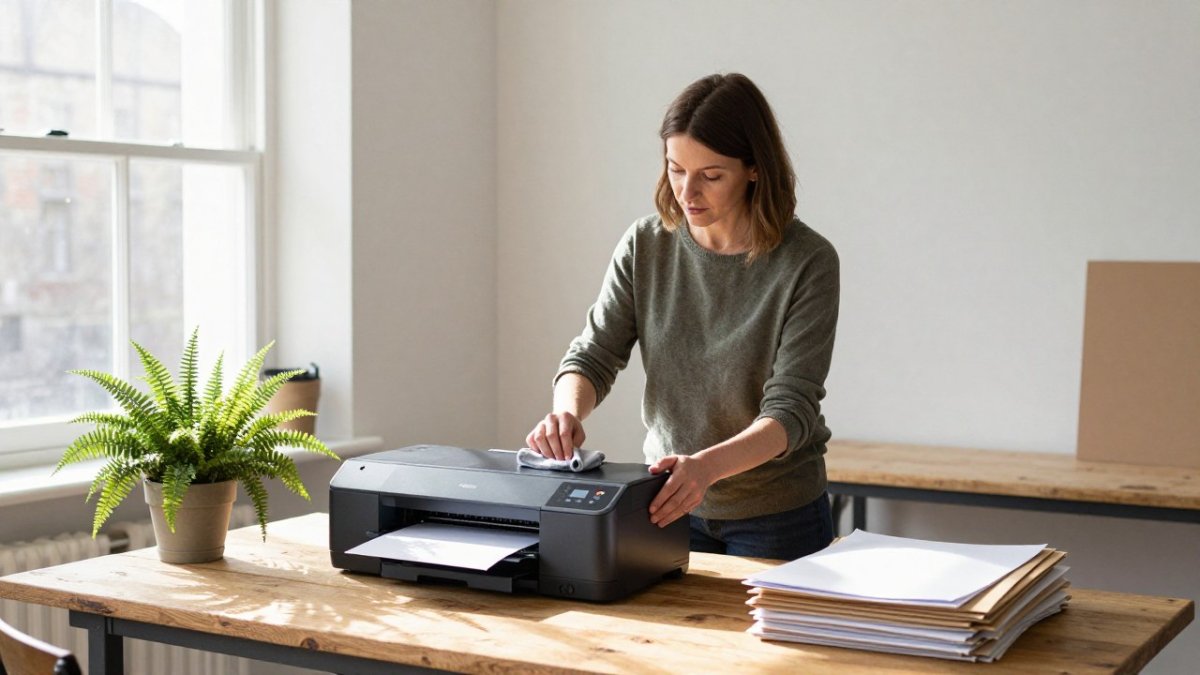
Last Updated: 12 November 2026
Quick Summary
Environmentally-friendly office operations for architecture firms are the day-to-day systems, equipment choices and workflows that cut energy use, paper waste and unnecessary consumption across a studio. They come down to four disciplined areas: energy, print, document workflow and procurement policy. Audit your devices, set duplex and mono defaults, move drawing registers online and review your sustainability checklist annually.
- Audit every powered device in the studio and replace the worst energy offenders first.
- Check active, ready and sleep-mode power figures before specifying any new device.
- Set duplex on, draft quality for internal reviews and colour locked behind a code.
- Agree a naming convention before migrating drawings and train the whole studio.
- Review the environmental sustainability checklist annually rather than writing it once.
Table of Contents
- What Environmentally-Friendly Office Operations Mean in an Architecture Practice
- Step 1: Audit Energy Use and Switch to Energy-Efficient Office Equipment
- Step 2: Set Up Eco-Friendly Printing for Architecture Offices
- Step 3: Move Drawing and Document Workflows to Paperless Office Systems for Architects
- Step 4: Work Through an Environmental Sustainability Checklist for Architecture Firms
- Common Mistakes That Undo Good Intentions
- Book a Technology Review With Crispin Associates
- Frequently Asked Questions
What Environmentally-Friendly Office Operations Mean in an Architecture Practice
Environmentally-friendly office operations for architecture firms are the day-to-day systems, equipment choices and workflows that cut energy use, paper waste and unnecessary consumption across a studio. This guide breaks the topic into four practical areas, then walks through a step-by-step implementation path you can act on this quarter.
The stakes are higher than most practices assume. Architecture is a paper-intensive profession by tradition: A1 plots, revision sets, planning packs, client presentation boards. Every one of those outputs carries an energy and materials cost. Meanwhile, public sector and NHS clients increasingly expect suppliers, including design consultancies, to demonstrate environmental responsibility in their own procurement. The four areas that decide your footprint are energy, print, document workflow and procurement policy. Get those right and the rest follows.
The Four Areas That Decide Your Footprint
- Energy: devices left on standby, oversized printers, poorly specified displays
- Print: plotter volume, paper stock, toner and consumable choice
- Workflow: how drawings move between teams, clients and contractors
- Policy: what you commit to in procurement and certification terms
Step 1: Audit Energy Use and Switch to Energy-Efficient Office Equipment
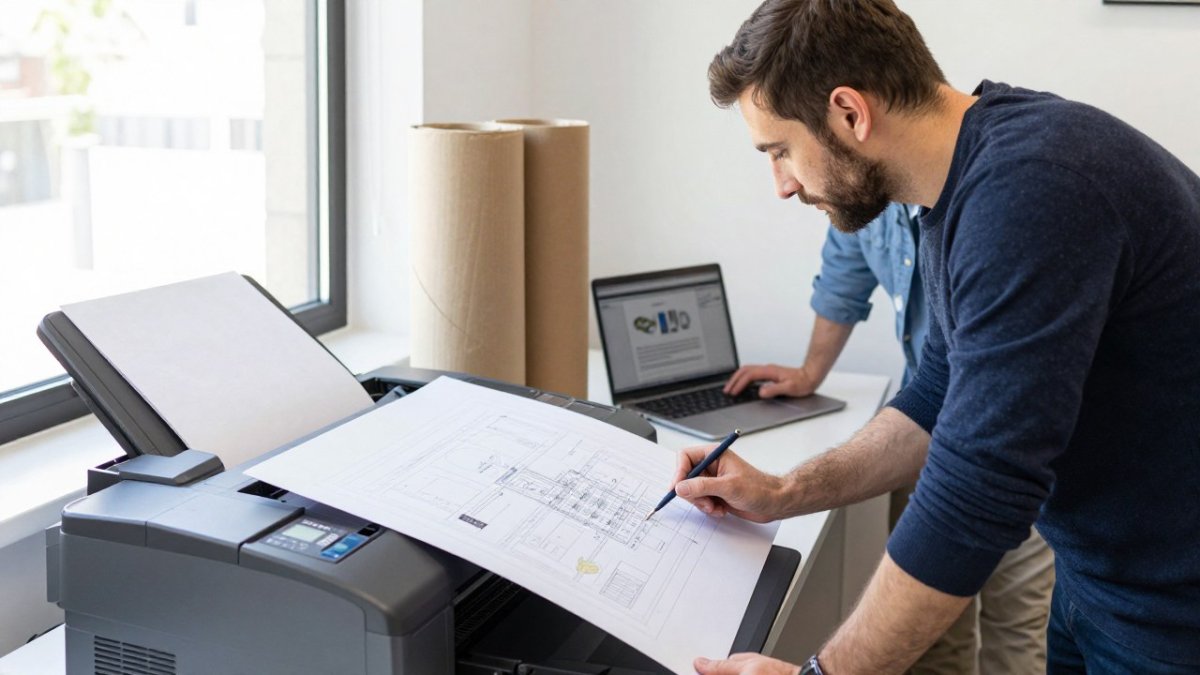
Start with a walk-round audit of every powered device in the studio, then replace the worst offenders first.
A common mistake is buying on purchase price alone. A large multifunction device that idles inefficiently for six years costs far more in energy than the difference between two purchase quotes. Check the power consumption figures for active, ready and sleep modes before you specify anything. For a structured approach to compliant purchasing, see our guide on procuring compliant office equipment.
What to Check on Every Device Before You Buy
- Active, ready and sleep-mode power figures in the product datasheet
- Whether the device meets current energy-efficiency criteria for its class
- Auto-off and scheduled shutdown settings, and whether they are configurable
- Duplex printing as standard, not an optional extra
- Expected service life and availability of replacement parts
Step 2: Set Up Eco-Friendly Printing for Architecture Offices
Eco-friendly printing for architecture offices means matching output to purpose: plotting only what genuinely needs a hard copy, defaulting to duplex and mono, and choosing devices and consumables with documented environmental credentials.
Set firm defaults across the fleet: duplex on, draft quality for internal reviews, colour locked behind a code for client-facing work only. When you specify new devices, look for recognised certification schemes rather than marketing claims. Our guide to eco-friendly printer certification explains which certificates actually mean something.
Taming Plotter and Large-Format Output
Introduce a plot request process so drawings are checked on screen before they are released, and consolidate revision sets rather than plotting each change. If you are reviewing your large-format estate, you can browse large-format printers suited to architectural drawings and plots.
Step 3: Move Drawing and Document Workflows to Paperless Office Systems for Architects
The goal is not zero paper. It is paper only where it adds real value, such as a site mark-up or a signed contract.
Start with one live project. Move the drawing register online, set permissions so the current revision is the only one anyone can access, and issue transmittals digitally with a clear audit trail. For a deeper walkthrough of the options, read our complete guide to document management.
Two practical points decide whether this sticks. First, agree a naming convention before you migrate anything; retrofitting one later is painful. Second, train the whole studio, not just the project leads, because one person printing from an old local copy undermines the whole system. Extending this discipline to the physical workspace ensures that your hardware and seating choices remain consistent with these efficiency goals, a philosophy championed by Cubicle Gurus.
Step 4: Work Through an Environmental Sustainability Checklist for Architecture Firms
An environmental sustainability checklist for architecture firms turns good intentions into auditable commitments. The checklist should cover policy, procurement and certification in equal measure, and it should be reviewed annually rather than written once and filed.
Policy, Procurement and Certification Points to Cover
- A written environmental policy signed off at partner level
- Energy-efficiency criteria embedded in every technology tender
- Preferred paper stock and consumable specification documented
- Print and plot volume tracked and reported quarterly
- Certification requirements stated for printers, plotters and displays
- End-of-life plan for devices, including take-back and recycling
- Supplier environmental credentials recorded and reviewed
Common Mistakes That Undo Good Intentions
A studio can buy the most efficient plotter available and still waste energy and paper if nobody changes how the team works.
Second, buying certification claims at face value. Ask for the certificate, check it covers the specific model, and confirm it is current. Third, running parallel paper and digital systems “for safety” during a transition and never retiring the paper one. That doubles cost and undermines the case for change.
Finally, leaving the audit as a one-off. Energy use drifts, devices get added, defaults get changed. A short quarterly review keeps the whole programme honest.
| Practice | Action | Expected Benefit |
|---|---|---|
| Energy | Audit devices, replace worst offenders | Lower running costs |
| Duplex defaults, plot request process | Less paper and toner | |
| Workflow | Digital drawing register | Fewer reprints, clear audit trail |
| Policy | Annual checklist review | Procurement-ready evidence |
Book a Technology Review With Crispin Associates
Running environmentally-friendly office operations for architecture firms comes down to four disciplined areas: energy, print, workflow and policy.
Crispin Associates has advised on environmentally-friendly office technology since 2000, covering printers, copiers, digital signage and interactive displays, with complete manufacturer support.
Contact us to arrange your review.
If your studio is still plotting every revision and running devices flat out, the savings are sitting there waiting. Crispin Associates can review your current setup and recommend energy-efficient equipment with full manufacturer support. Get started with Crispin Associates and put a practical sustainability plan in place.
Frequently Asked Questions
How can an architecture firm make its office more environmentally friendly?
Start with a short audit of energy and print use, then act on the biggest items first. That usually means setting devices to sleep automatically, replacing older printers and copiers with energy-efficient office equipment, and moving drawing reviews to on-screen markups. Add a written policy so the changes stick, and review your energy and paper figures each quarter.
What are the best ways to reduce paper use in an architecture office?
Switch internal drawing reviews, planning checks and sign-offs to PDF markup on screen, and set printers to default to double-sided black and white. Keep a single large-format device for the plots that genuinely need paper, such as client presentations and site sets, rather than several desktop printers.
How can architecture firms make printing more sustainable?
Choose devices with duplex printing and low standby power, and ask the supplier for the manufacturer’s environmental documentation before you commit. Set pull printing so jobs only release at the device, which cuts abandoned plots. Recycle toner and cartridge waste through the manufacturer’s programme, and track pages per month so you can see whether the fleet is the right size. Eco-friendly printing for architecture offices is mostly about matching output to need.
What should an office sustainability policy include?
Cover energy (device settings, shutdown routines, heating and lighting), procurement (environmental criteria in every technology purchase), waste (paper, cartridges, packaging and old equipment), travel and digital storage. Name who owns each item and how often it is reviewed. Keep it to two pages so people actually read it, and attach the environmental sustainability checklist for architecture firms as an appendix.
